
The Geopolitics of Canals: From Suez and Panama to the Isthmus of Tehuantepec
Throughout history, the construction of strategic canals has been a catalyst for geopolitical competition, interventionism, and the reshaping of global power dynamics. The Suez Canal, the Panama Canal, and the proposed Interoceanic Corridor of the Isthmus of Tehuantepec in Mexico all share a common thread: they are not merely infrastructure projects but also focal points for imperial ambitions, national sovereignty, and resistance. By examining the historical parallels between these projects, we can better understand the risks and challenges facing the Tehuantepec corridor today.
The Suez Canal and the Capture of Gibraltar: A Tale of Colonial Control
The construction of the Suez Canal, completed in 1869, was a monumental engineering feat that connected the Mediterranean Sea to the Red Sea, dramatically shortening the maritime route between Europe and Asia. Conceived by French diplomat Ferdinand de Lesseps, the canal quickly became a strategic asset for colonial powers, particularly Britain. Recognizing its importance for maintaining control over India and its global empire, Britain seized control of the canal in 1882, following a period of financial instability in Egypt and a nationalist uprising.
Similarly, the British capture of Gibraltar in 1704 during the War of the Spanish Succession was driven by its strategic location at the entrance to the Mediterranean. Gibraltar became a symbol of British naval dominance and a critical chokepoint for controlling maritime trade routes. Both the Suez Canal and Gibraltar illustrate how colonial powers have historically sought to control key geographic points to secure their economic and military interests.
The Panama Canal and American Intervention: Sovereignty and Hegemony
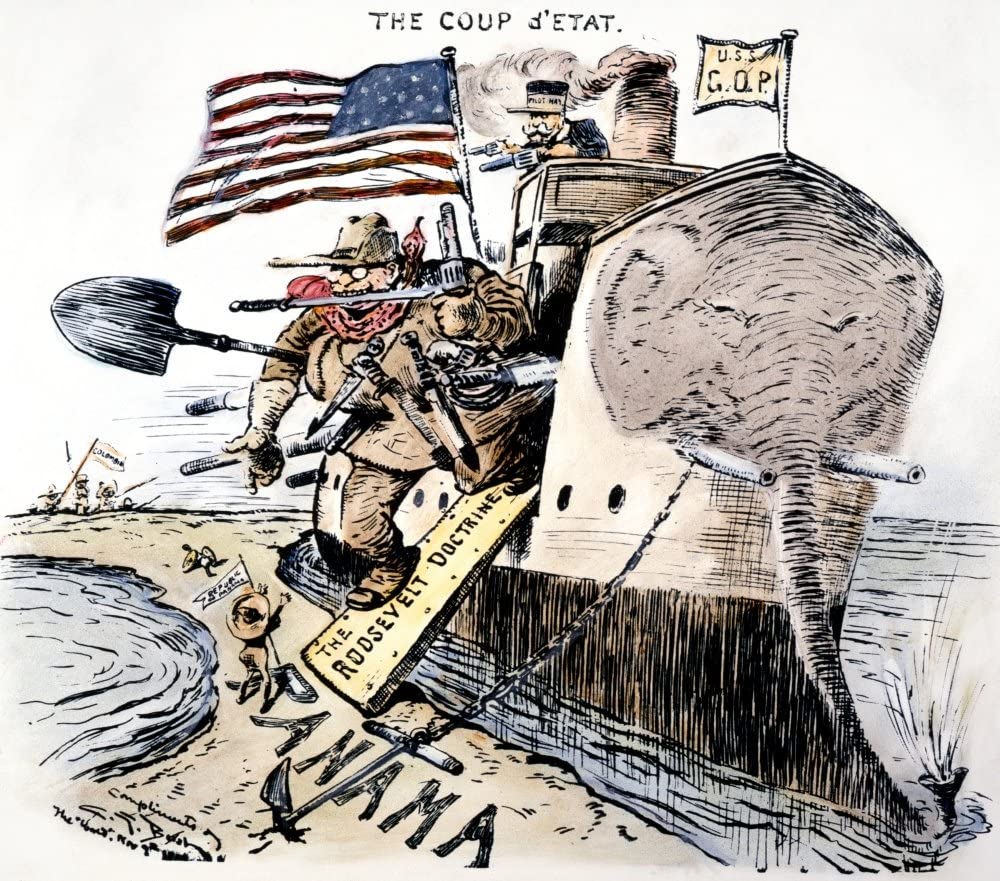
The construction of the Panama Canal, completed in 1914, followed a different but equally contentious path. Initially a French project under de Lesseps, the canal was later taken over by the United States after the French effort collapsed due to engineering challenges and disease. The U.S. not only oversaw the canal’s construction but also orchestrated Panama’s separation from Colombia in 1903 to secure favorable terms for its control.
The Hay-Bunau-Varilla Treaty granted the U.S. sovereignty over the Panama Canal Zone, effectively making it a de facto American colony. This arrangement lasted until 1977, when the Torrijos-Carter Treaties began the process of transferring control to Panama, a process completed in 1999. The Panama Canal’s history underscores how great powers have often intervened in weaker states to secure strategic infrastructure, often at the expense of national sovereignty.
The Isthmus of Tehuantepec: A New Frontier for Geopolitical Rivalry?
The Interoceanic Corridor of the Isthmus of Tehuantepec, a project first conceived during the Porfiriato in the 19th century and revived by Mexican President Andrés Manuel López Obrador (AMLO), aims to create a land-based trade route connecting the Atlantic and Pacific Oceans. The project includes modernized railways, ports, and industrial parks, positioning Mexico as a key player in global trade.
However, the history of the Suez and Panama Canals suggests that such projects can attract the attention of external powers seeking to control strategic trade routes. The Tehuantepec corridor, located in a region with a history of social unrest and economic inequality, could become a target for interventionism, particularly as the U.S. and China vie for influence in Latin America.
Moreover, the region’s complex social dynamics, including indigenous communities and marginalized populations, could fuel resistance to the project. If not managed carefully, this resistance could escalate into armed conflict, potentially providing a pretext for foreign intervention or the emergence of guerrilla movements. Such a scenario would mirror the historical patterns seen in Suez and Panama, where local struggles were exploited by external powers to advance their own interests.
Conclusion: Learning from History
The construction of the Suez and Panama Canals demonstrates how strategic infrastructure projects can become flashpoints for geopolitical competition and interventionism. As Mexico moves forward with the Interoceanic Corridor of the Isthmus of Tehuantepec, it must navigate these historical lessons carefully. Ensuring that the project benefits local communities, respects national sovereignty, and resists external pressures will be critical to avoiding the fate of its predecessors.
In an era of renewed great power rivalry, the Tehuantepec corridor has the potential to reshape global trade—but only if Mexico can assert its independence and protect its interests in the face of historical forces that have long sought to control the world’s most strategic passages.




 thereconquest.com
Deja un comentario