
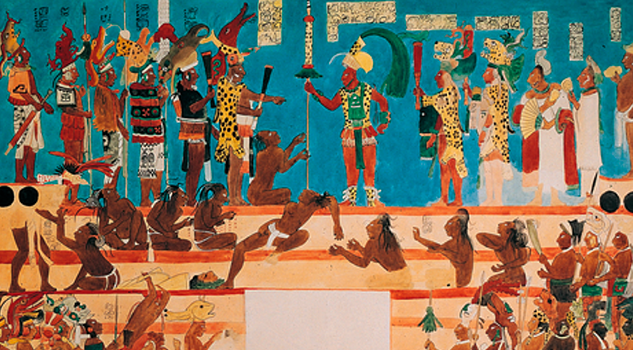
The Origins of Mesoamerican Religion: Pagan Prophets, Human Sacrifice, and the Divine Cycle
The religion of the Mesoamericans is one of the most fascinating and misunderstood aspects of their civilization. Often reduced to its most dramatic element—human sacrifice—it was, in reality, a complex and profound system of beliefs that shaped every aspect of life. While the Toltecs are often credited with formalizing many of these religious practices, the roots of Mesoamerican spirituality run much more profound. They can be traced back to ancient pagan prophets who traveled across the Americas, preaching a unique religion emphasizing the sacredness of sacrifice, the interconnectedness of life and death, and the divine responsibility of humans to maintain cosmic balance.
The Pagan Prophets: Preachers of a Continental Faith
Long before the rise of the Toltecs, Maya, or Aztecs, a network of pagan prophets traversed the Americas, spreading a shared religious vision. These prophets were not tied to a single culture or region but were part of a broader spiritual movement that connected distant peoples. They preached a uniquely American religion, rooted in the belief that the gods had sacrificed themselves to create the world and that humans, in turn, had a sacred duty to reciprocate through offerings and sacrifices.
This religion was not confined to Mesoamerica but resonated across the continent, from the Andes to the Mississippi Valley. The prophets carried with them stories of creation, cycles of destruction and renewal, and the importance of maintaining harmony with the divine. They taught that the gods were not distant or indifferent but deeply involved in the world, requiring constant nourishment through human effort.
Human Sacrifice: The Core of the Divine Covenant
At the heart of this religion was the practice of human sacrifice, a ritual that has often been sensationalized and misinterpreted. To the Mesoamericans, sacrifice was not an act of cruelty but a sacred obligation. It was based on the belief that the gods had given their own blood and lives to create the universe and sustain humanity. In return, humans were expected to offer their most precious resource—life itself—to ensure the continued favor of the gods.
The true objective of human sacrifice was multifaceted. On a spiritual level, it was a way to «feed» the gods and maintain the cosmic order. The Mesoamericans believed that the world existed in a fragile balance, and without regular offerings, the sun would not rise, the rains would not fall, and the crops would not grow. Sacrifice was a form of reciprocity, a way of giving back to the divine forces that sustained life.
On a practical level, human sacrifice served as a mechanism for social control and power. By centralizing the practice within the ruling class and priesthood, it reinforced their authority and legitimacy. The act of sacrifice was often tied to important agricultural cycles, wars, and political events, ensuring that the community remained united under a shared religious framework.
Eradicating Famine and Disease: The Social Benefits of Sacrifice
The Mesoamerican religion was not just about appeasing the gods; it was also deeply concerned with the well-being of society. Human sacrifice was seen as a way to prevent famine, disease, and other calamities. By offering the lives of a few, the many could be saved. This belief was rooted in the idea that the gods rewarded those who honored them with bountiful harvests, good health, and prosperity.
The Mesoamericans valued life deeply, but they also saw death as an integral part of the divine cycle. Death was not an end but a transition, a necessary step in the ongoing process of creation and renewal. Those who were sacrificed were often seen as honored individuals, chosen to fulfill a sacred duty. Their deaths were not in vain but served a higher purpose, ensuring the survival and flourishing of their community.
Death as a Divine Warning: The Eternal Cycle
For the Mesoamericans, death was a constant reminder of the fragility of life and the inevitability of the divine cycle. They believed that the world had been created and destroyed multiple times, each era ending in catastrophe and rebirth. Human sacrifice was a way of acknowledging this cycle and aligning themselves with the forces that governed it.
This worldview fostered a society that valued discipline, resilience, and collective responsibility. It encouraged individuals to live virtuously, knowing that their actions had cosmic consequences. At the same time, it provided a sense of continuity and hope, as death was not seen as a finality but as part of an eternal process.
Conclusion: A Religion of Balance and Reciprocity
The religion of the Mesoamericans was far more than a collection of rituals and beliefs; it was a comprehensive system that addressed the spiritual, social, and practical needs of its followers. Rooted in the teachings of ancient pagan prophets, it emphasized the sacredness of sacrifice, the interconnectedness of life and death, and the importance of maintaining harmony with the divine.
Human sacrifice, often misunderstood, was at the core of this religion. It was a way of honoring the gods, ensuring the well-being of society, and acknowledging the eternal cycle of creation and destruction. While the practices of the Mesoamericans may seem foreign or even shocking to modern sensibilities, they were deeply meaningful to those who practiced them, offering a way to navigate the challenges of life and death in a world governed by divine forces.
In the end, the religion of the Mesoamericans reminds us of the enduring human quest for meaning, balance, and connection with the sacred. It is a testament to the complexity and richness of their civilization, one that continues to inspire and intrigue us today.




 thereconquest.com
Deja un comentario